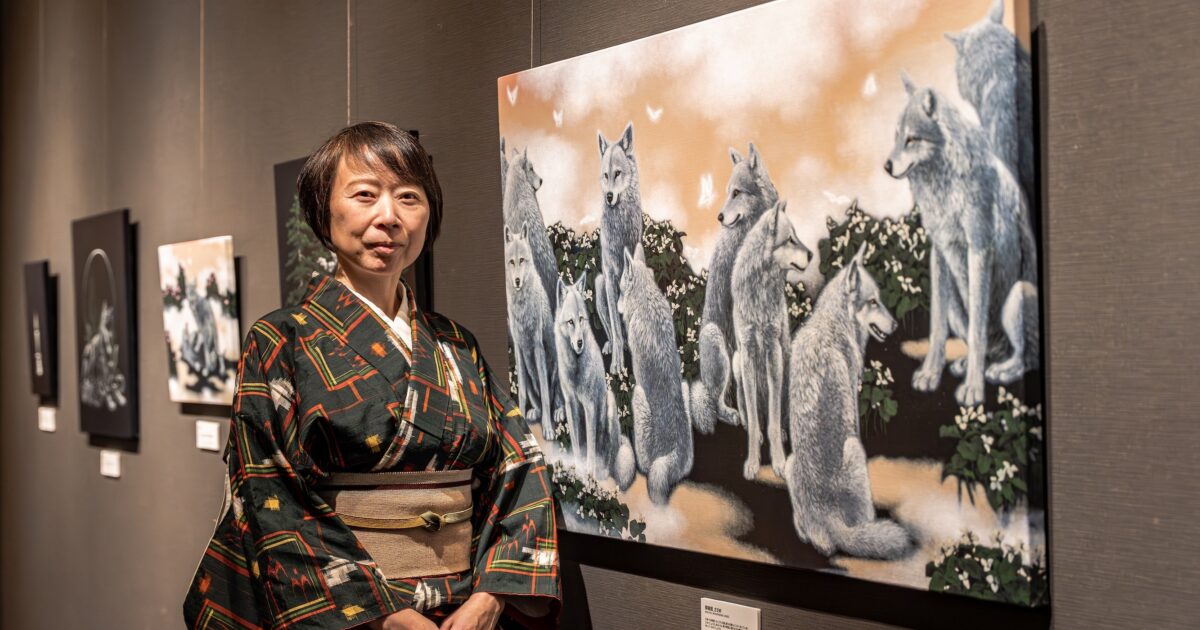
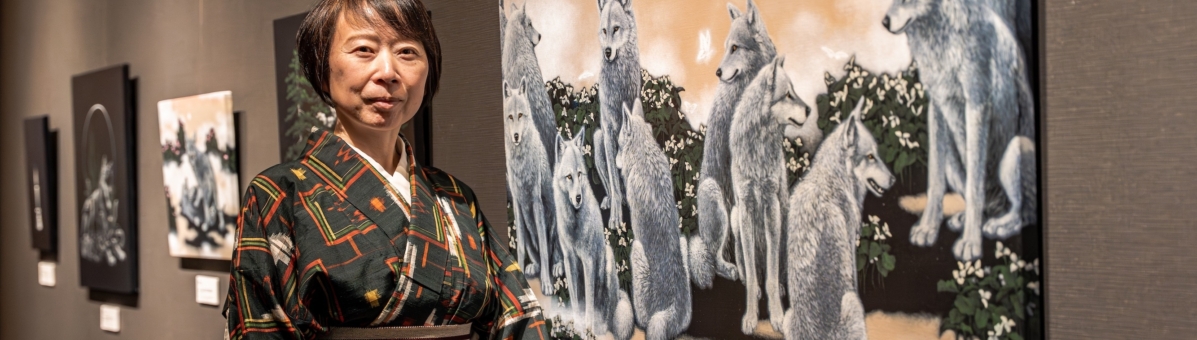
We sat down with contemporary artist Hiroko Takahashi to explore the ideas and inspirations behind her current exhibition, Toyomu (“Resound”), now on display at Ki Gallery on the first floor of Ki Niseko.
Running until 30 January 2026, the exhibition brings together ten evocative works that reflect on the enduring relationship between humans and the natural world. Through motifs of reverence, awe, and quiet unease, Takahashi invites viewers to pause and consider what we have inherited from nature, what has been lost along the way, and what it ultimately means to be human.
The exhibition is free to enter and open to all guests and visitors to Ki Niseko.
In recent years I have been interested in Japan's ancient culture and how people from this time perceived natural phenomena, plants, and animals, and how this reflected customs and beliefs. While modern times are far removed from the era, I ponder whether the ideologies held by ancient Japanese people are still shared by us today.
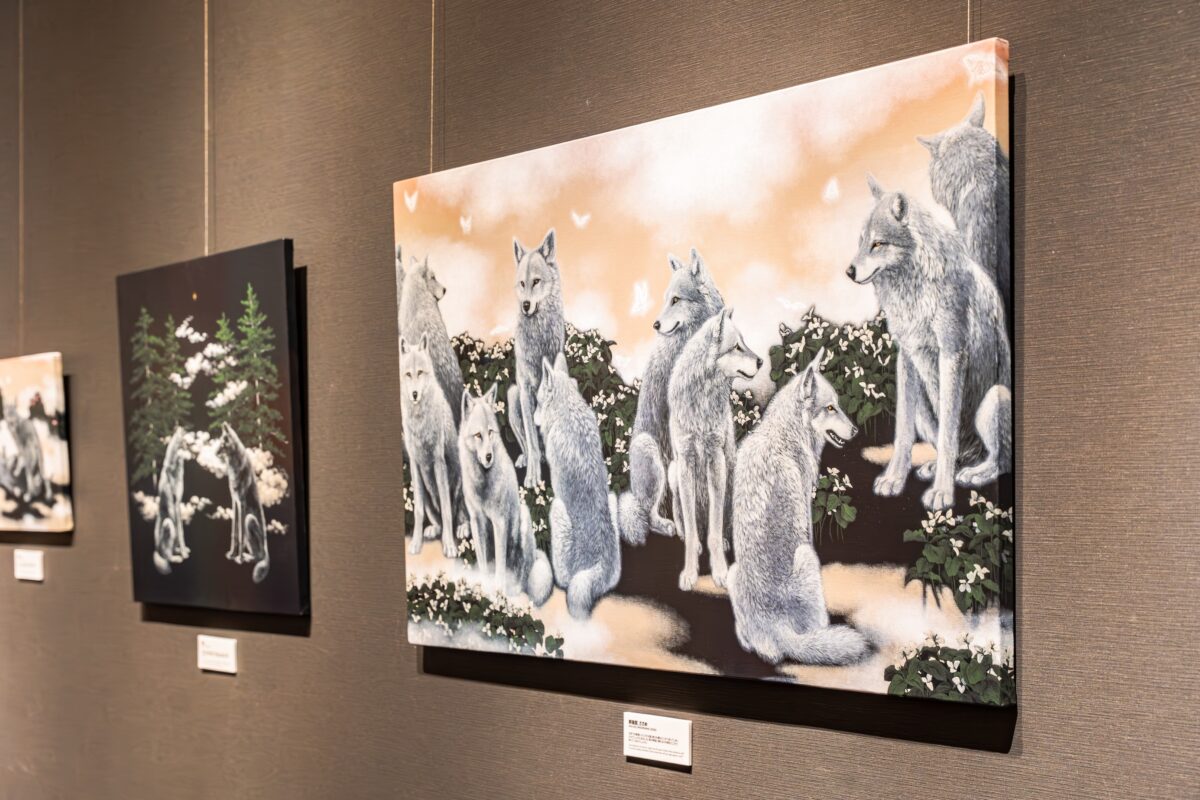
Within this context, I have frequently depicted the motif of the wolf. Consequently, this exhibition primarily features works referencing wolf worship, practiced in certain regions of Honshu, and legends featuring wolves.
While wolves are my primary motif, I have created works that explore and express questions such as “What is humanity?” and “What are humans doing?”. I use acrylic paint as my medium.
While few of my works directly depict scenes of faith or mythology, I hope Japanese viewers will also ponder what ancient Japanese people saw and how they constructed their culture. Furthermore, I hope it becomes an opportunity for us to consider that even today, we ourselves are (perhaps unconsciously) actively constructing some form of culture.
For visitors from outside Japan, I would be delighted if they could sense glimpses of Japanese culture, such as its beliefs and customs. Furthermore, while both the Japanese wolf and the Ezo wolf are now extinct in Japan, largely due to human extermination, I hope viewers can also imagine that wolves once roamed freely across this Hokkaido landscape. However, “what you saw and how you felt about it” is a crucial clue for understanding yourself, so I also value interpretations that differ from the artist's intent.
The intuition that sparks my creative ideas comes in all forms: sudden moments, encounters with certain information, or while contemplating a concept.
If a visual image comes first, I consider “what that visual image signifies.” If a textual concept comes first, I think about “what motifs, composition, and colour scheme would best express that concept as an image” to solidify the work's content.
My interest in Japanese culture remains strong, so I plan to continue creating work that references it. However, while Japan is an island nation, its culture has matured through influences from foreign countries since ancient times. Consequently, commonalities with foreign cultures can be seen in customs and beliefs. I want to create while contemplating whether this stems merely from knowledge or experience, or if humans fundamentally possess shared ideologies. Also, I believe grasping “who I am” is important for each individual, so I hope to present works that can be a part of that process.